Dambisa Moyo: Profile and Biography
Zambian-born economist, author, corporate director and public commentator

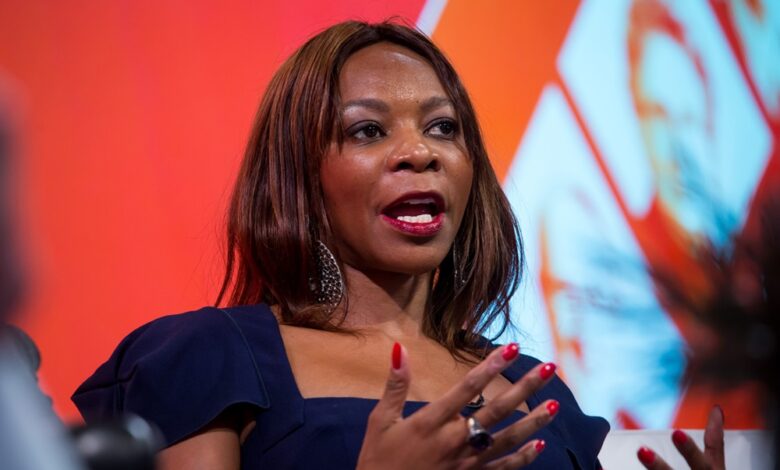
Dambisa Felicia Moyo, known formally as Baroness Moyo, is one of the most prominent economists to emerge from Africa. Born in Lusaka, Zambia, on 2 February 1969, she has built an international career that was achieved through academic research, investment banking, corporate governance, best-selling authorship and public policy. She is well known for her provocative analysis of foreign aid in Africa, her writing on the shifting balance of global economic power, and her service on the boards of some of the world’s largest companies.
Moyo analyses the global macroeconomy and international affairs, advising companies, boards and executives on investment decisions, capital allocation and risk management. She is the founder and chief executive of the Mildstorm Group, a boutique firm that studies the world economy and financial markets and works with clients to shape investment strategies. Her opinion pieces appear regularly in outlets such as the Financial Times, The Economist and The Wall Street Journal, and she is a sought-after keynote speaker at forums around the world.
Early Life and Family
Dambisa Moyo was born in Lusaka, the capital of Zambia, to Stephen and Orlean Moyo. She grew up in a country that had won independence in 1964 and adopted an economic model with a strong role for the state. The economic realities of Zambia and the wider continent during her childhood, including debt, commodity dependence and the uneven results of development assistance, left a deep impression on her. Those early observations would later shape the questions that drive her work: why some countries grow while others stagnate, and what role outside money plays in either outcome.
Education
Moyo began her studies at the University of Zambia, where she read chemistry. She then moved to the United States on a scholarship to American University in Washington, D.C., where she completed an undergraduate degree in chemistry and an MBA in finance. The shift from the natural sciences to finance and economics reflected a growing interest in how economies work and why they fail.
She went on to earn a Master of Public Administration from Harvard University’s John F. Kennedy School of Government, and later a doctorate in economics from the University of Oxford, where she was a member of St Antony’s College. This combination of scientific training, business education, public policy study and advanced economic research gave her an unusually broad foundation for the work that followed.
Early Career: World Bank and Goldman Sachs
Moyo’s professional career began at the World Bank in Washington, D.C., where she worked as a consultant. The experience gave her a close view of how development institutions operate and how aid and lending decisions are made, an insight she would later use critically in her writing.
In 2001 she joined Goldman Sachs as a research economist and strategist. She remained with the firm until November 2008, working mainly in debt capital markets, hedge fund coverage and global macroeconomics. Her years on Wall Street gave her first-hand knowledge of how capital moves across borders, how investors price risk in emerging markets, and how financial markets respond to economic and political change.
Dead Aid and the Debate Over Foreign Assistance
Moyo reached a global audience in 2009 with her first book, Dead Aid: Why Aid Is Not Working and How There Is a Better Way for Africa. The book argued that decades of large-scale, government-to-government aid had, in her view, entrenched dependency, encouraged corruption and weakened the incentives for African governments to build accountable institutions and attract private investment. She called for a phased reduction of such aid and for greater reliance on trade, capital markets, entrepreneurship and domestic revenue.
The book became an international bestseller and a lightning rod. Supporters welcomed a leading African voice challenging the aid orthodoxy. Critics, among them economists such as Jeffrey Sachs, argued that targeted aid had delivered real gains in areas like public health and that cutting it would harm vulnerable people. Others, including Paul Collier, offered more qualified assessments of aid’s effectiveness. Whatever one’s view, Dead Aid changed the terms of the conversation and brought questions of African agency and self-reliance to the centre of public debate. It also led TIME magazine to name her one of the 100 most influential people in the world.
Later Books
Moyo’s subsequent books widened her focus from Africa to the global economy.
- How the West Was Lost (2011) examined what she saw as the decline of Western economic dominance and the policy choices that contributed to it.
- Winner Take All: China’s Race for Resources and What It Means for the World (2012), a New York Times bestseller, explored China’s pursuit of commodities and its consequences for global markets, including for resource-rich African nations.
- Edge of Chaos (2018) considered the pressures on democracy and economic growth and proposed reforms to restore long-term prosperity.
- How Boards Work (2021) drew on her extensive experience as a director to explain how corporate boards function and how they can govern better in an uncertain world.
Together, these works show a consistent thread: a focus on the structural forces, whether debt, resource competition, demographics or governance, that shape the long-term path of nations and companies.
Corporate Governance and Board Service
Moyo is widely recognised as a leading corporate director. Over the years she has served on the boards of major global companies, including Barclays, Barrick Gold, Seagate Technology, SABMiller, Chevron and 3M. Her board work spans banking, mining, technology, brewing and energy, giving her a rare cross-sector perspective on strategy, risk and capital allocation. Board memberships change over time, so current appointments should always be confirmed against company announcements.
Public Service and the House of Lords
Beyond business, Moyo has taken on public roles in the United Kingdom. She served as a commissioner on the UK Commission on Race and Ethnic Disparities and was a non-executive board member of the Department for International Trade from November 2020 to February 2023. She sits in the House of Lords as Baroness Moyo, bringing her economic expertise to national debate.
Honours and Recognition
Moyo’s influence has been acknowledged in numerous ways. TIME named her among its 100 most influential people, and she received the 2013 Hayek Lifetime Achievement Award. She has been recognised among emerging global leaders and is a regular participant in major international forums on the economy and policy.
Perspective and Style
Moyo is known for direct, data-driven argument and a willingness to challenge consensus, whether on aid, globalisation or the performance of democratic institutions. Admirers see in her a pragmatic advocate of growth, accountability and entrepreneurship. Detractors say she underplays the benefits of certain forms of assistance or the role of history and external shocks in shaping African economies. Both sides agree that she has made the debate richer and more global.
Personal Interests
Outside her professional life, Moyo is an avid tennis fan and has completed several half marathons and marathons.
Legacy and Significance
For many in Zambia and across Africa, Moyo’s story is one of intellectual ambition and global reach: a Lusaka-born scientist-turned-economist who rose to the top tables of finance and policy. Her work has pushed policymakers, investors and citizens to ask harder questions about how prosperity is built, who bears responsibility for it, and what role outside actors should play. Whether or not one agrees with her conclusions, her career illustrates the growing influence of African thinkers in shaping global economic ideas.
Note: Details such as current board roles and titles can change. Verify them against official sources before publication.